Wallets and Security
Rug Pull Warning Signs
The common warning signs of crypto rug pulls, from contract permissions and liquidity control to team behaviour and marketing tactics, with checks anyone can run.
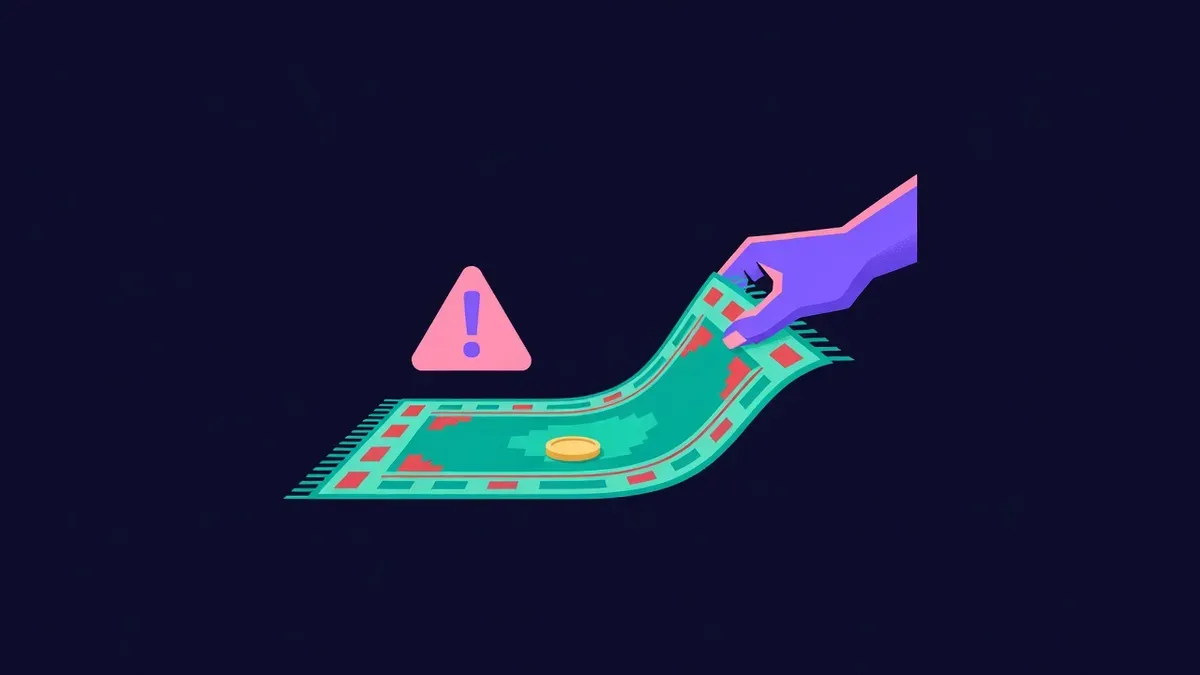
A rug pull happens when the people behind a crypto project take investors' money and abandon it. Sometimes they drain liquidity pools. Sometimes they mint new tokens and sell them. Sometimes they simply stop working after selling their holdings. Rug pulls cost users large amounts every year, especially in new token launches.
No checklist catches every scam, but many rug pulls share warning signs you can check in a few minutes.
This article is educational and not financial advice.
Contract warning signs
Token contracts can include powers that let insiders harm holders:
| Warning sign | Why it matters |
|---|---|
| Unlimited minting by the owner | Insiders can create tokens and sell them |
| Ability to pause transfers for everyone except the owner | Holders cannot sell |
| Adjustable taxes up to very high levels | Owner can make selling nearly impossible |
| Blacklist functions without clear limits | Specific holders can be blocked |
| Unverified contract source code | Nobody can check what it does |
| Upgradeable contract controlled by one wallet | Rules can change at any time |
Token scanners and block explorers can highlight some of these functions. Verified code with limited owner powers is a better sign than hidden or unlimited controls.
Liquidity warning signs
Liquidity pools let people trade the token. If insiders control liquidity, they can remove it:
- Liquidity provider tokens held in a regular wallet controlled by the team
- Liquidity locks that expire very soon
- Most liquidity added from a single wallet with no public identity
- Very thin liquidity compared with the claimed market cap
Check whether liquidity is locked, for how long and by which contract.
Distribution warning signs
Look at who holds the supply:
- A few wallets holding most tokens
- Team wallets receiving large allocations without vesting
- Wallets funded from the same source holding large amounts
- Large transfers to exchanges shortly after launch
Block explorers show top holders. Concentrated holdings give insiders the power to crash prices.
Team and communication warning signs
- Anonymous teams with no track record, combined with unrestricted contract powers
- Promises of guaranteed returns or specific price targets
- Pressure to buy quickly before a "listing" or "announcement"
- Deleting critical questions and banning people who ask them
- Roadmaps full of vague promises with no delivered milestones
- Claimed partnerships that partners never confirm
Pseudonymous teams are common and not automatically suspicious. The combination of anonymity, control and pressure is what raises risk.
Marketing warning signs
- Heavy paid promotion from influencers without disclosure
- Countdown timers and "last chance" messaging
- Celebrity or brand association without confirmation
- Fake engagement, such as many identical comments
Checks anyone can run
Before buying a new token:
- Confirm the contract address from the official website
- Check that the contract is verified on the block explorer
- Use a token scanner to review owner permissions
- Look at liquidity locks and their duration
- Review top holders and their history
- Search for independent discussion, including critical opinions
- Start with an amount you can afford to lose
If you suspect a rug pull
Stop buying, avoid interacting with suspicious contracts and warn others with facts rather than accusations. If a rug pull has happened, report details to exchanges where funds were sent and to relevant authorities.
Legitimate projects make checks easy
Honest teams usually make these checks simple, with verified contracts, locked or transparent liquidity, published vesting and consistent official links. Proud Globe itself avoids token mechanics entirely: placements are simple advertising purchases paid in stablecoins, with no token to buy and nothing to sell.
Educational content only. Nothing here is financial, legal or tax advice. Crypto assets carry risk, so check the details for your own situation.