Crypto Around the World
Map Your Users: Why Geography Matters for Web3 Growth
Why understanding where users are helps Web3 projects grow, how to gather location insights while respecting privacy, and how to act on regional patterns.
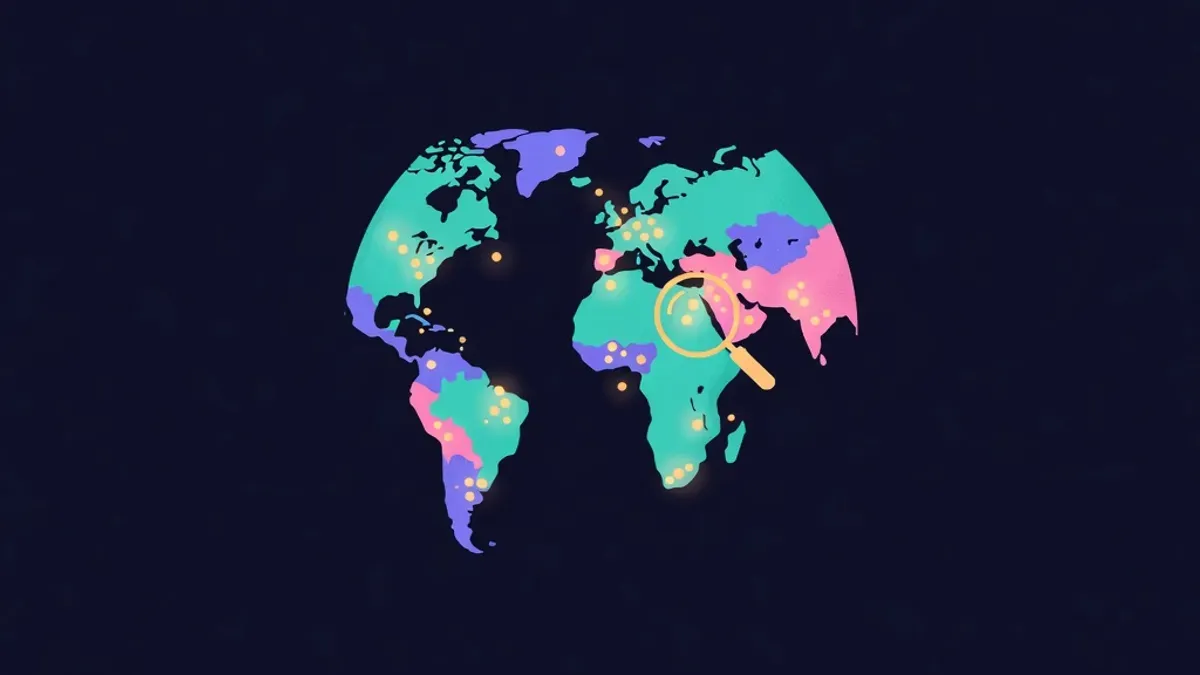
Web3 projects often describe their users as "global". That word hides useful detail. Users are not spread evenly across the planet. They cluster in certain cities, regions and language groups, each with their own habits, time zones, payment methods and concerns. Projects that understand where their users are can make better decisions about product, marketing, support and partnerships.
Why geography matters
Location affects almost every part of growth:
| Area | How geography matters |
|---|---|
| Product | Local payment methods, languages and device types |
| Marketing | Channels, influencers and cultural references differ |
| Community | Time zones shape events and support coverage |
| Partnerships | Local exchanges, wallets and communities |
| Compliance | Rules differ between jurisdictions |
| Events | Where meetups and conference visits pay off |
A feature that delights users in one region may be irrelevant in another.
Gathering location insights respectfully
Crypto users value privacy, so collect location insights carefully:
- Use aggregated website analytics showing traffic by country, without tracking individuals
- Ask optional survey questions about region and language
- Look at activity in language and regional community channels
- Track which regional partners and campaigns bring users
- Observe time zone patterns in community activity
Avoid linking wallet addresses to precise locations or collecting unnecessary personal data. Aggregated, voluntary information is usually enough for strategic decisions.
Look for clusters
Once you have data, look for patterns:
- Which countries or cities bring the most users?
- Which regions show the fastest growth?
- Where do users convert, retain or transact more?
- Which regions generate the most support questions?
- Where are community contributors concentrated?
Clusters often reveal opportunities, such as a city where word of mouth is spreading or a language community that needs better support.
Act on regional patterns
Insights matter only if they change decisions. Examples:
- Translate onboarding for a fast-growing language group
- Schedule community calls at times that suit your largest regions
- Recruit moderators in underserved time zones
- Partner with local exchanges or wallets popular with your users
- Host or sponsor meetups in cities with strong clusters
- Adjust marketing messages to reflect local use cases
Start with one or two regional experiments, measure results and expand what works.
Beware of misleading data
Location data has limits. VPN usage is common among crypto users, which can distort country analytics. Some regions may be underrepresented because of access restrictions. Treat geographic data as directional, and confirm patterns with community conversations.
Share the map with your community
Communities enjoy seeing their global footprint. Sharing an anonymised map of where members come from, or highlighting regional groups, builds pride and encourages members in underrepresented regions to connect.
When sharing, protect privacy by showing only broad regions or voluntary entries.
Plan regional experiments
Treat each regional opportunity as an experiment with a clear hypothesis. For example: translating onboarding into Portuguese should increase weekly active users from Brazil within six weeks. Run the change, measure the result against a baseline and decide whether to expand, adjust or stop. Keep experiments small enough that a failure does not consume the quarter's budget.
Regional experiments also build relationships. Local moderators, translators and meetup hosts who help with an experiment often become long-term advocates, even when the first attempt needs changes. Record what each region taught you, because those notes guide the next expansion far better than general assumptions about "global" users.
Turn insight into presence
Understanding geography is the first step. Being visible in the places that matter is the next. Projects increasingly mark the cities where their communities cluster. On the Proud Globe, a project can plant pins over its strongest regions, including Prime tiles over major crypto hubs, turning its user map into a public, shareable picture of where it belongs.
Educational content only. Nothing here is financial, legal or tax advice. Crypto assets carry risk, so check the details for your own situation.