Stablecoins and Payments
Keeping Business and Personal Crypto Wallets Separate
Why businesses and freelancers should separate business and personal crypto wallets, how to structure wallets by purpose, and the security and accounting benefits.
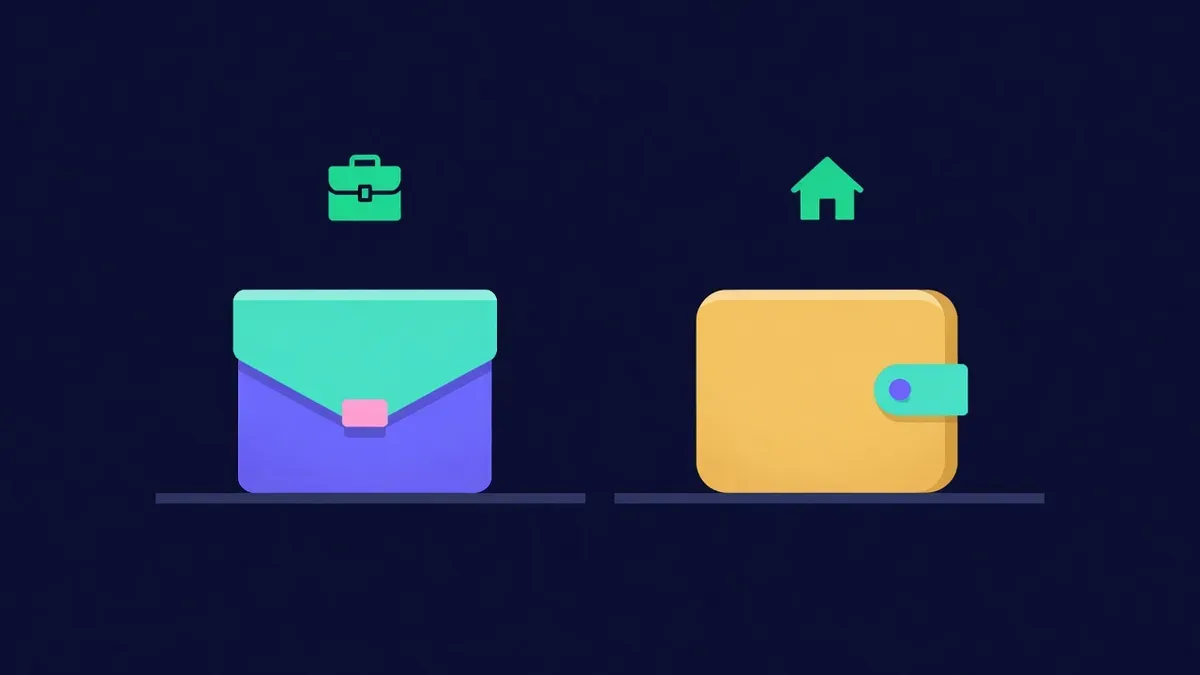
Many freelancers and small crypto businesses start by receiving payments into the same wallet they use for personal trading, NFT mints and experiments with new apps. It works until tax season arrives, a drainer empties the wallet or a client sees an embarrassing transaction history. Separating business and personal wallets is one of the simplest ways to reduce risk and confusion.
Why separation matters
Security. A wallet used to connect to many dApps accumulates approvals and exposure to malicious contracts. Business income in the same wallet is at risk from every experiment.
Accounting. Mixed wallets make it hard to identify which transactions are business income, expenses, personal spending or transfers.
Privacy. Clients and customers can view your wallet history on a block explorer. A business address with only business activity shares far less.
Professionalism. A dedicated address looks deliberate and makes payment instructions clearer.
A simple wallet structure
Small businesses often use a few wallets with clear purposes:
| Wallet | Purpose | Security level |
|---|---|---|
| Receiving wallet | Customer payments and invoices | Hardware wallet or multisig |
| Operations wallet | Paying suppliers, freelancers and fees | Hardware wallet, smaller balance |
| Treasury or savings | Longer-term holdings | Multisig or cold storage |
| Personal wallet | Personal spending and holdings | Separate hardware wallet |
| Experimental wallet | Trying new apps and mints | Small balance only |
Move funds between business wallets on a schedule, such as weekly, rather than making many small transfers.
Receiving wallet best practices
Your receiving address is public, so treat it carefully:
- Never connect it to dApps or sign unknown messages with it
- Publish it only on official pages
- Use the same address across supported EVM networks when your wallet type allows it
- Monitor incoming transactions for fake tokens and ignore them
- Sweep funds regularly to the treasury wallet
Operations wallet practices
Operations wallets send payments, which carries its own risk:
- Keep only the balance needed for upcoming payments
- Verify every recipient address through a trusted channel
- Use address books for regular recipients
- Require a second person to review large payments
- Record the purpose of each outgoing transaction

Accounting benefits
Clean separation makes bookkeeping much easier:
- Every incoming transaction to the receiving wallet is likely revenue
- Every outgoing transaction from operations is an expense or transfer
- Transfers between business wallets are internal and easy to label
- Personal activity stays out of business records
Many crypto accounting tools let you import wallet addresses by category, which works far better when wallets have single purposes.
For freelancers
Freelancers can apply a lighter version: one receiving wallet for client payments, one personal wallet and one small experimental wallet. Moving business income to personal funds becomes a clear, recorded transfer, which helps when calculating income and taxes.
Planning for access
Business wallets should not depend on one person's memory. Document which wallets exist, what they are for and how recovery works, stored securely. For teams, multisig wallets with several signers remove single points of failure.
Review the structure every year
Wallet structures drift. A receiving wallet ends up connected to an app for convenience, an operations wallet starts holding savings, or a team member leaves with a signer key. Once a year, list every wallet, its purpose, its usual balance range and who controls it. Close wallets you no longer need, rotate keys held by people who left and move funds back to where they belong. The review takes an hour and stops slow, invisible risk from building up.
Publish one official address
When customers pay you, they should see the same official receiving address in every official place. Keep it consistent on your website, invoices and public profiles such as a Proud Globe pin page, and warn customers that you will never change payment addresses through direct messages.
Educational content only. Nothing here is financial, legal or tax advice. Crypto assets carry risk, so check the details for your own situation.