Token Launches
How Liquidity Pools Work at a Token Launch
A plain explanation of how liquidity pools set prices at launch, how much depth a small token needs, what price impact means, and how teams lock pool tokens.
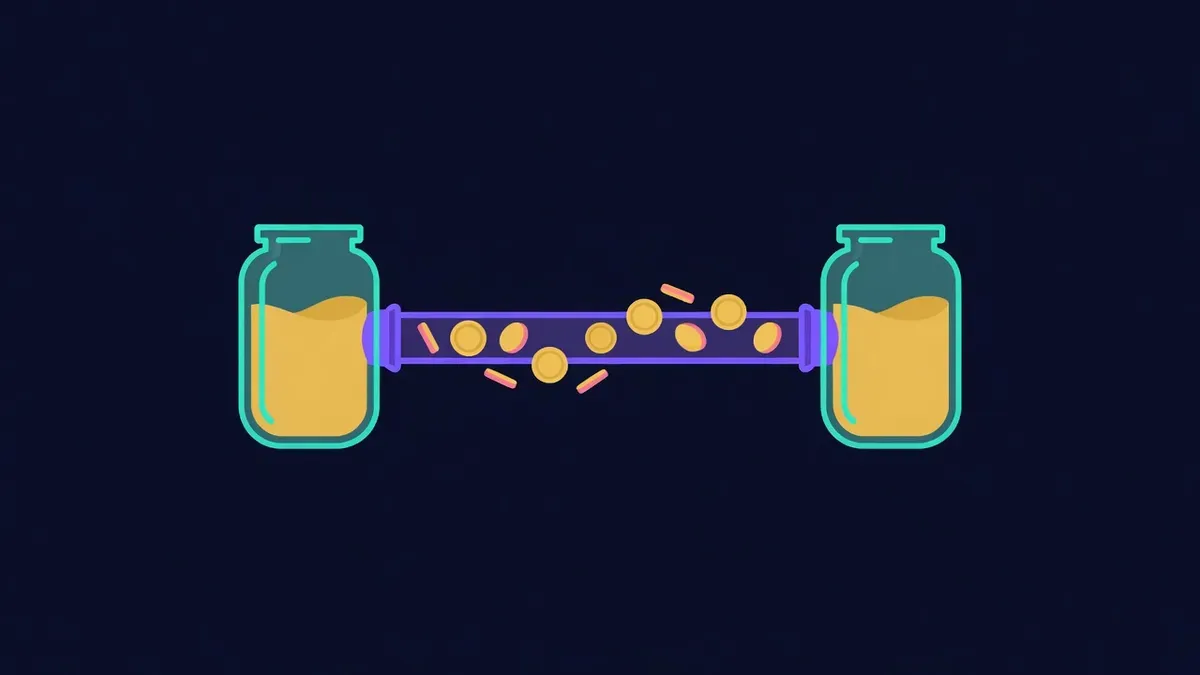
When a new token starts trading on a decentralised exchange, its first price does not come from an order book full of buyers and sellers. It comes from a liquidity pool: a smart contract holding two tokens, such as your new token and USDC, and a formula that sets the price based on how much of each it holds. Understanding that formula helps you plan a launch that behaves the way you expect.
The basic idea
The most common type of pool is a constant product market maker. It keeps the product of the two token balances constant. If a pool holds 1,000,000 of your token and 50,000 USDC, the starting price is 0.05 USDC per token.
When someone buys your token with USDC, USDC goes into the pool and your token comes out. Because the product must stay constant, each additional token bought costs slightly more than the last. That change in price during a trade is called price impact.
Why pool size matters
Price impact depends on how large a trade is compared to the pool. In a small pool, a modest purchase can move the price a lot. In a deep pool, the same purchase barely moves it.
| USDC in pool | Buy of 1,000 USDC | Approximate price impact |
|---|---|---|
| 10,000 | Large relative to pool | Around 20% |
| 50,000 | Moderate | Around 4% |
| 250,000 | Small | Under 1% |
These figures are rough, since exact results depend on the pool type and fees, but they show the pattern. Thin pools create sharp price swings, which can make a launch look chaotic even when demand is ordinary.
Choosing a starting price and depth
The starting price comes from the ratio of tokens you deposit. The depth comes from how much value you put in. Teams usually decide the price they want and the price impact they can accept for a typical trade, then work out the deposit.
Consider who will trade in the first hours. If you expect many small buyers, moderate depth may be enough. If you expect a few large buyers, deeper liquidity reduces the chance of a spike followed by a crash.
Concentrated liquidity
Some exchanges let liquidity providers concentrate funds within a price range. This makes liquidity deeper near the current price while using less capital. It also means that if the price moves outside the range, the position stops providing liquidity.
For launches, concentrated liquidity can make trading smoother with a smaller budget, but it needs active management. Teams without experience often start with full-range positions and learn from there.
Pool tokens and locks
When you add liquidity, you receive tokens or an NFT representing your share of the pool. Whoever holds that position can withdraw the liquidity. If the team can pull liquidity at any time, buyers worry about a rug pull, where liquidity is removed and the price collapses.
Many teams lock their liquidity positions in a time-lock contract or send them to a multisig with published signers. Share the lock details and contract addresses publicly so buyers can verify them.
Launch day behaviour to expect
Even with good preparation, the first hours are often volatile. Bots may buy in the first blocks. Early buyers may sell quickly. Prices can swing widely before settling.
A few steps reduce problems:
- Publish the pool address and pair from the official website before trading begins
- Warn users about fake pools using your token name
- Avoid adding liquidity in several places at once unless you can manage them all
- Monitor large trades and be ready to explain price moves in your community channels
After launch
Liquidity is not a one-time decision. As volume grows, you may add depth, incentivise other providers or move to additional venues. Keep a public page listing official pools and lock details, and update it whenever something changes.
Clear, consistent official information protects buyers from copycat pools. Listing your verified links in every place people might look, from your docs to a Proud Globe profile, makes it harder for fake pools to catch them out.
Educational content only. Nothing here is financial, legal or tax advice. Crypto assets carry risk, so check the details for your own situation.