Crypto Around the World
One Globe, Many Chains: Mapping Crypto Ecosystems
How to map crypto ecosystems across chains, sectors and regions, why ecosystem maps help builders and users, and how to keep maps accurate and useful.
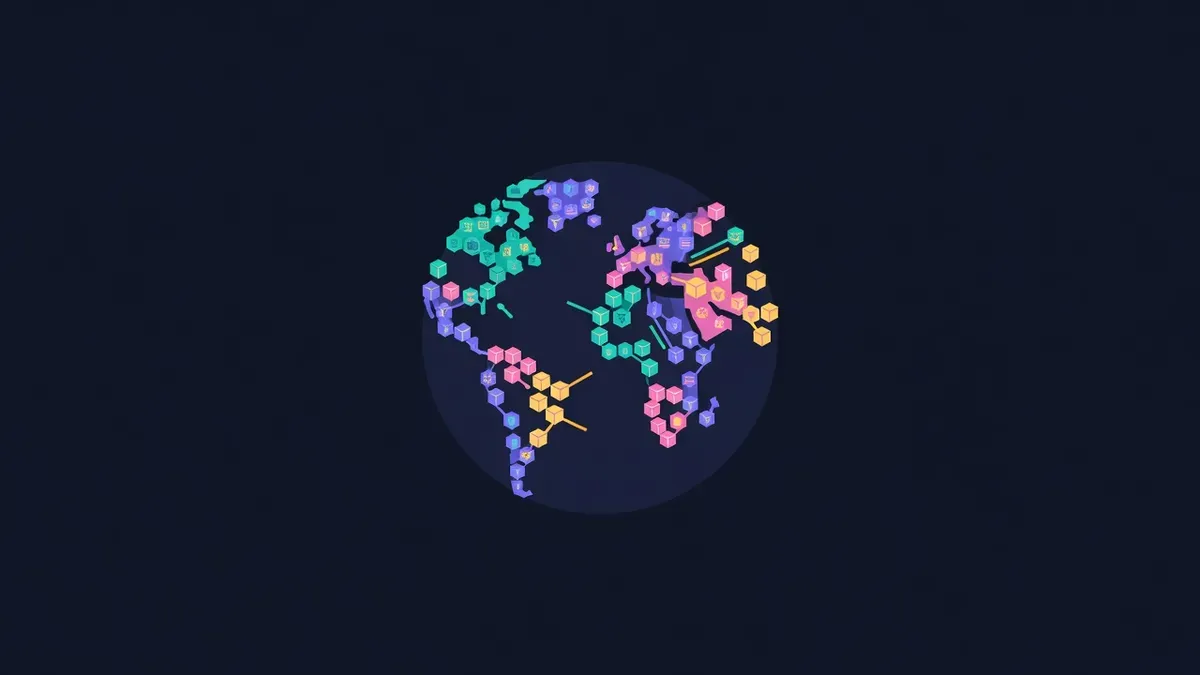
Crypto is often described chain by chain: the Ethereum ecosystem, the Solana ecosystem, the Base ecosystem and so on. Ecosystem maps try to show all the projects building on a network or in a sector, usually as grids of logos grouped by category. Maps help newcomers orient themselves, help investors spot gaps and help builders find partners. Adding geography reveals yet another dimension: where projects and communities actually are.
Why ecosystem maps are useful
| Audience | How maps help |
|---|---|
| New users | Discover apps and wallets to try |
| Builders | Find integrations, partners and underserved categories |
| Researchers | Track growth and concentration |
| Investors | Identify sectors and gaps |
| Ecosystem teams | Showcase activity and attract developers |
| Journalists | Understand a network's projects quickly |
A good map turns a confusing space into something people can explore.
Common map formats
Ecosystem maps take several forms:
- Logo grids grouped by category, such as DeFi, wallets and infrastructure
- Searchable directories with filters and descriptions
- Network graphs showing integrations between projects
- Timelines showing when projects launched
- Geographic maps showing where teams and communities are based
Each format answers different questions. Logo grids show breadth. Directories support discovery. Geographic maps show distribution of people and activity.
Geography adds context
Chains are borderless, but the people building on them are not. Mapping ecosystems geographically can reveal:
- Regional hubs of developer activity
- Communities that concentrate around certain chains
- Underserved regions where education or tooling is needed
- Time zones that matter for support and events
Geographic views help ecosystem teams plan events, grants and localisation.
Keeping maps accurate
Ecosystem maps age quickly. Projects shut down, rebrand, move chains or never launch. Outdated maps mislead users and damage credibility. Keep maps accurate:
- Include last updated dates
- Let projects submit and update their own entries, with verification
- Remove inactive projects regularly
- Link each entry to official websites
- Distinguish between live products and announced plans
Verification matters
Maps can be abused by scam projects seeking legitimacy. Before listing a project, check:
- Official website and verified contracts
- Active social accounts linked from the website
- Real product functionality
- No known security incidents without resolution
Clearly state whether inclusion implies any endorsement. Most maps should be explicit that they are informational.
Building your own map
Communities and researchers can create useful maps with simple tools:
- Define scope, such as a chain, sector or region
- Collect entries from official sources
- Categorise consistently
- Publish in a searchable format with links
- Set a schedule for updates
Maps as community projects
Crowd-sourced maps grow faster when communities contribute. Offer simple submission forms, reward accurate contributions and credit maintainers.
Show relationships between projects
Logo grids show who exists, but they rarely show how projects connect. Adding relationships reveals much more: which wallets support which apps, which protocols depend on shared oracles and which communities overlap. Even simple tags, such as "integrates with" or "built on", help users understand the ecosystem. Relationship data also highlights risks, since many projects depending on a single component can all be affected when that component fails. Keep relationship claims factual and confirmed by the projects involved.
A globe that anyone can join
Proud Globe is a different kind of ecosystem map: instead of logos in a grid, projects from any chain place pins on the tiles where they are based or where their communities gather. Every pin links to an official website, and the whole picture is searchable on The Wall. Adding your project takes a few minutes on the claim page.
Educational content only. Nothing here is financial, legal or tax advice. Crypto assets carry risk, so check the details for your own situation.