Crypto Marketing
Honest Crypto Marketing Claims That Still Convert
How to write crypto marketing that attracts users without hype, including claims to avoid, evidence to include and ways to make accurate messages compelling.

Crypto has a hype problem. Projects promise to change finance forever, offer returns that sound too good to be true and describe prototypes as finished platforms. Audiences have learned to tune it out, and regulators have learned to pay attention. Honest marketing is safer, and it often converts better with the users who stay.
This article offers general guidance and is not legal advice.
Claims that cause trouble
Some types of claims create legal risk, damage trust or both:
| Risky claim | Why it causes problems |
|---|---|
| Guaranteed returns or yields | Returns are rarely guaranteed and may suggest an investment offering |
| Price predictions for your token | Implies profit expectation and invites liability |
| "Risk free" or "safe" | Every smart contract and market carries risk |
| Partnerships not confirmed by the partner | Can be publicly denied |
| User or volume numbers without sources | Easy to disprove on-chain |
| "Audited" without linking the report | Suggests security that may not exist |
| Claims of being regulated or approved | Must be accurate for each jurisdiction |
Removing these claims does not make marketing dull. It moves attention to things you can prove.
Replace hype with specifics
Specific claims feel more credible and are easier to remember. Compare:
- "The fastest bridge in crypto" with "Bridge USDC between Base and Arbitrum in under two minutes, with fees shown before you confirm"
- "Earn massive yields" with "Current lending rate on USDC is shown live on the app, and comes from interest paid by borrowers"
- "Trusted by thousands" with "4,200 wallets deposited last month, according to our public dashboard"
Specific numbers need to be true and sourced. Link to the source where possible.
Show evidence near the claim
Put proof next to claims, not buried in docs:
- Link audit reports directly from the security section
- Link dashboards next to usage numbers
- Quote partners only with their permission and link their announcement
- Show product screenshots instead of describing features vaguely
- Include dates with any statistic
Evidence turns claims into facts readers can check, which is powerful in an industry full of empty promises.
Talk about risks without scaring people
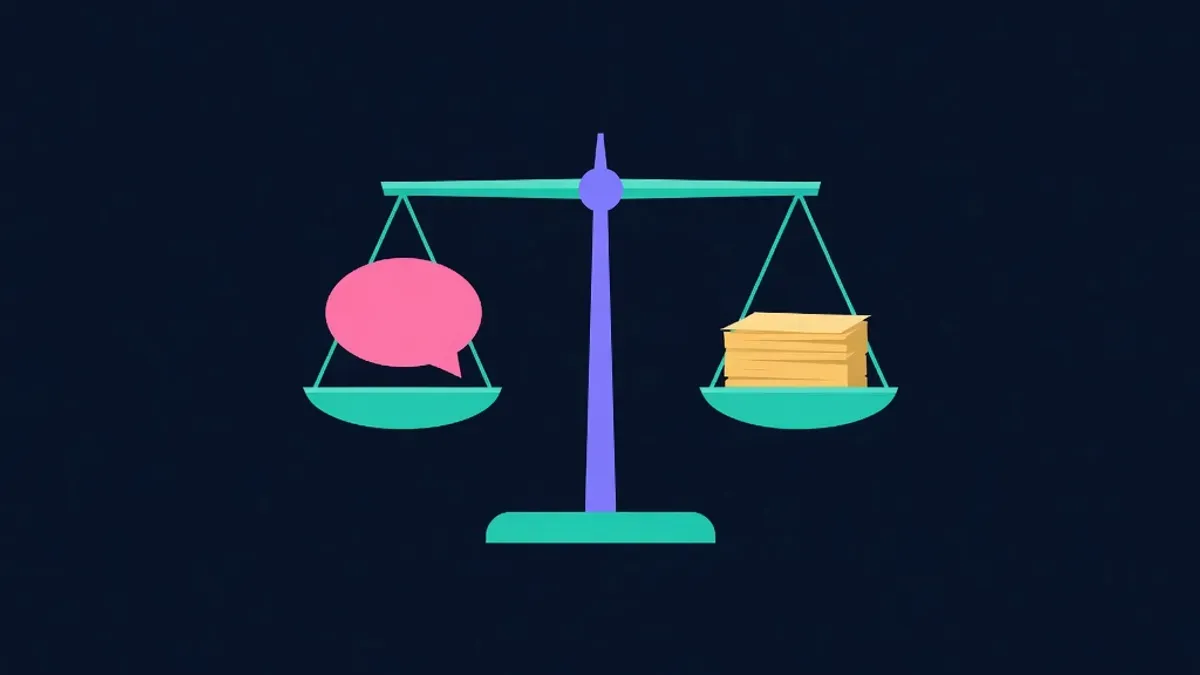
Risk disclosures can sit alongside persuasive messaging. A short, plain statement of key risks near deposit or purchase buttons shows respect for users. Link to a fuller risks page. Most careful users appreciate it, and the users who leave because of honest risk statements are often the ones who would complain loudest later.
Make honest messages compelling
Honesty still needs craft:
- Lead with the user's problem and your specific solution
- Use stories from real users, with permission
- Show the product in action
- Keep sentences short and concrete
- Give readers one clear next step
A calm, confident tone signals that the team expects its product to stand on its merits.
Review before publishing
Create a short checklist for anyone writing marketing copy:
- Is every number accurate, sourced and dated?
- Does anything imply guaranteed profit or price growth?
- Are partner mentions confirmed?
- Are risks mentioned where money is involved?
- Would we be comfortable seeing this quoted in a critical article?
For significant campaigns or token-related messaging, ask a lawyer to review.
Choose placements with clear rules
Where your marketing appears affects how it is received. Placements that label sponsored content and refuse guaranteed-return claims protect readers and legitimate advertisers alike. Proud Globe's advertising rules reject price predictions and guaranteed returns, and every sponsored article is clearly labelled.
Educational content only. Nothing here is financial, legal or tax advice. Crypto assets carry risk, so check the details for your own situation.